
Three survey responses. Thousands of shoppers through the store that week. And a district manager being asked to explain the score.
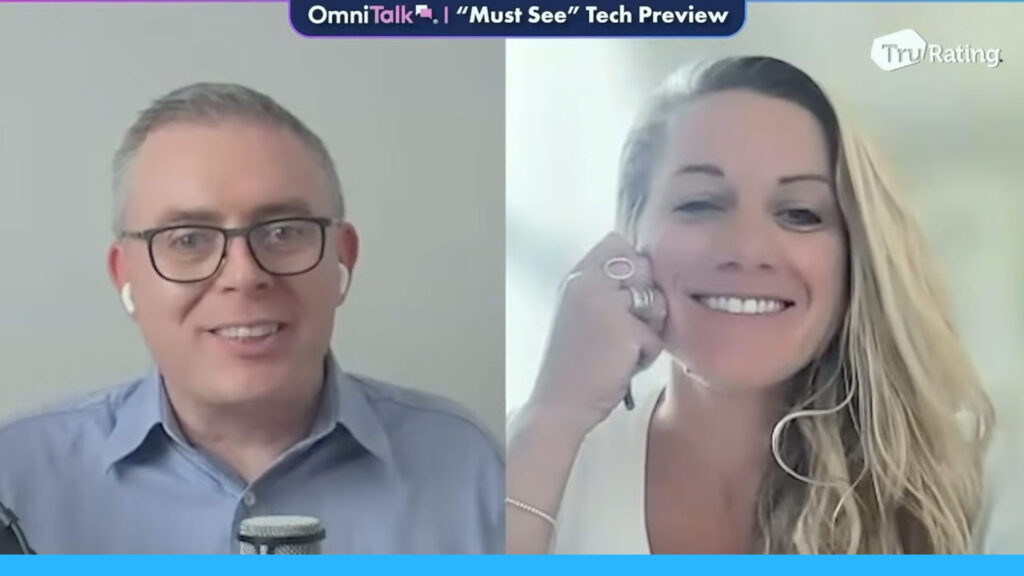
That was the experience Omni Talk CEO Chris Walton described during the Fall Conference Season “Must See” Tech Preview. Guest host Ben Miller of GrocerTalk came at the same issue from a research angle: small samples, recalled behavior, and not enough feedback from people while they are actually in the store.
It is why Miller introduced TruRating as “my first must-see technology for this fall.” TruRating opened a five-company session built around technologies the hosts believe are worth retailers’ time this conference season.
When three responses carry too much weight
As a former Target district manager, Walton remembered being held accountable for survey results based on three responses from thousands of weekly shoppers. The score mattered, but there was not enough behind it to show what was happening across the store or what his team should change.
Miller described the same gap from the other side. He said he has become increasingly skeptical of quantitative research that asks small groups to recall what they did or felt after the event. For in-store decisions, he wants to know what people think in the moment, at a scale teams can use.
Georgina Nelson, TruRating founder and CEO, put a number on the gap: retailers typically hear from fewer than 1% of customers through follow-up feedback. And the people motivated to respond often sit at the extremes, either very happy or very unhappy.
One question at payment, enough answers to act
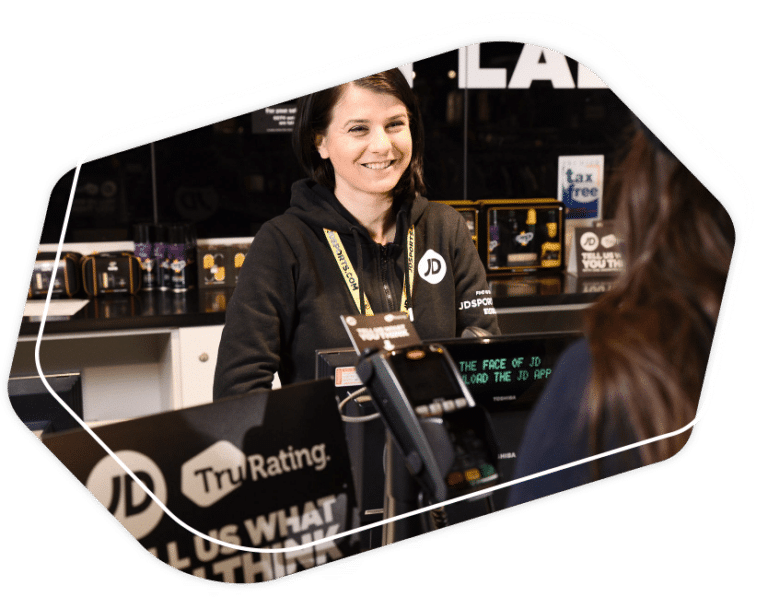
TruRating takes a different approach. It asks one skippable question on the payment terminal while the customer is already checking out. The answer follows a completed payment and remains anonymous.
That volume changes what a retailer can see. Teams can compare patterns by store, shift and daypart. TruRating says 84% of in-store customers answer the single question.
Questions rotate and can also be triggered by what is in the basket. A shopper buying jeans might be asked whether they used the fitting room. Someone buying from a new vitamin range could be asked about that range.
And the answer does not sit on its own. It is joined anonymously to transaction context such as spend and basket contents. Anonymized card-token recognition can also show return frequency without identifying the shopper. That lets teams compare what customers experienced with what they spent and whether they came back.
The grocery KPI that backfired
The strongest example in the conversation came from grocery. Georgina described a large grocer that rewarded stores for reducing fresh-produce waste. On paper, the KPI made sense. But TruRating data showed product scores falling through the day in a particular group of stores. Those stores were also the ones performing best against the wastage target.
The retailer tested the link by asking customers about fruit and vegetable freshness. Stores were keeping produce on shelves for longer to protect the wastage number, while shoppers were seeing tired produce and spending about $7 less per visit.
The grocer changed course. It pulled back the wastage focus, put more emphasis on freshness, and saw both customer scores and financial results improve. That is the operational point. Store teams need enough feedback to find where execution varies, connect that variation to commercial outcomes, and focus coaching or a policy change where it can make a difference.
Deeper research still has a clear role
Miller was also clear about what this approach does not replace. Long-form research still matters when a retailer needs to understand emotion, motivation, or the deeper reasons behind a decision.
The use case here is different: a high-volume read on specific moments while they are happening, compared with the transaction and store context. The two methods can sit alongside each other.
That balance was also reflected in Walton’s closing view. What stood out to him was the volume of answers to the question a retailer cares about most, and the ability to connect those answers back to operations.
Try it at Groceryshop
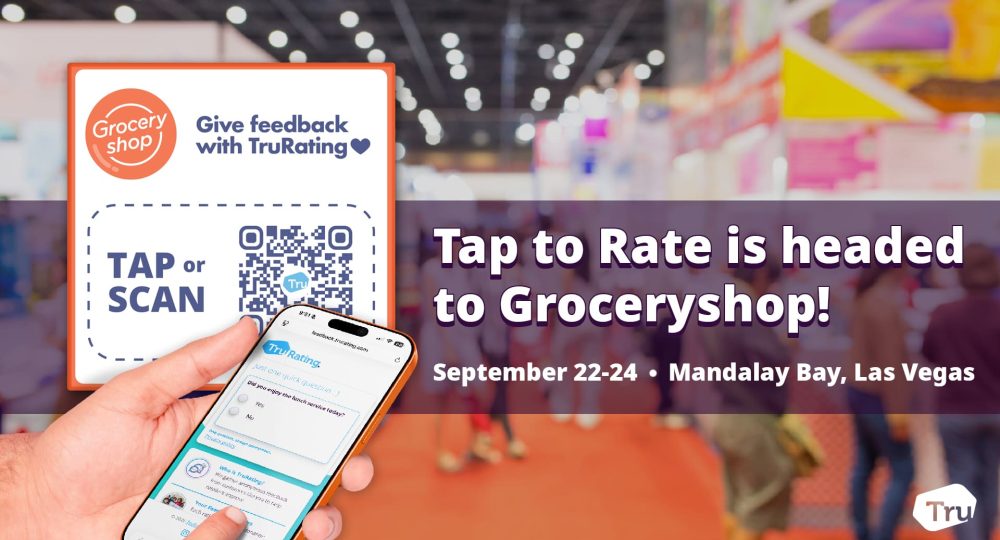
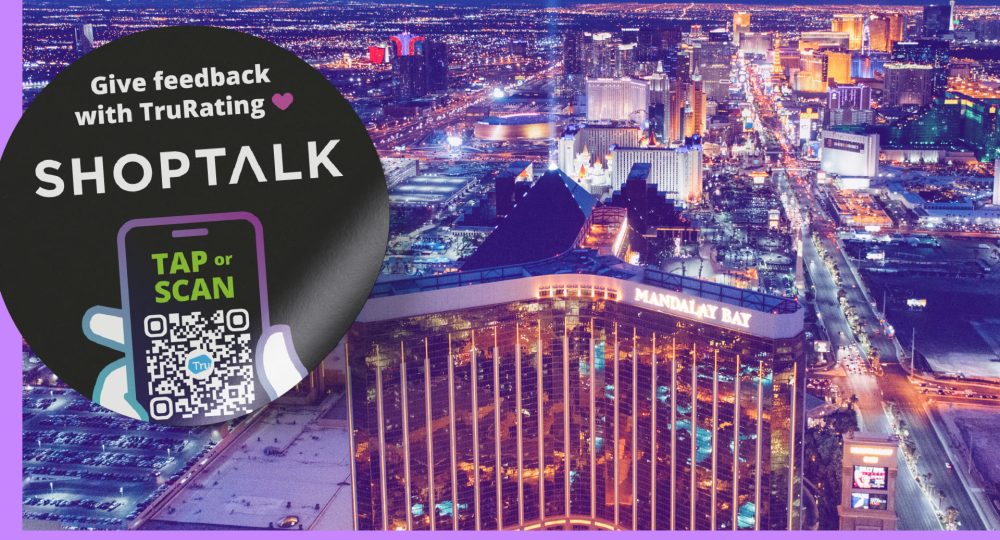
Groceryshop runs September 22 to 24 at Mandalay Bay in Las Vegas. Georgina will be there for all three days, and TruRating will be bringing Tap to Rate to the show floor.
Tap to Rate applies the same principle beyond a purchase. An attendee taps their phone on an NFC stand or scans a QR code. One question opens in the browser, they answer, and they move on. There is no app to download and no long survey to complete. At Groceryshop, the technology will be collecting feedback for the event organizers themselves.
A conference floor has the same issue that started the Omni Talk discussion: thousands of people are having an experience, but only a fraction will remember to comment on it later.
If you are heading to Groceryshop, look out for Tap to Rate and try it for yourself. You can also reach Georgina Nelson on LinkedIn to arrange a coffee.
Want to see how the same approach could work across your stores?