
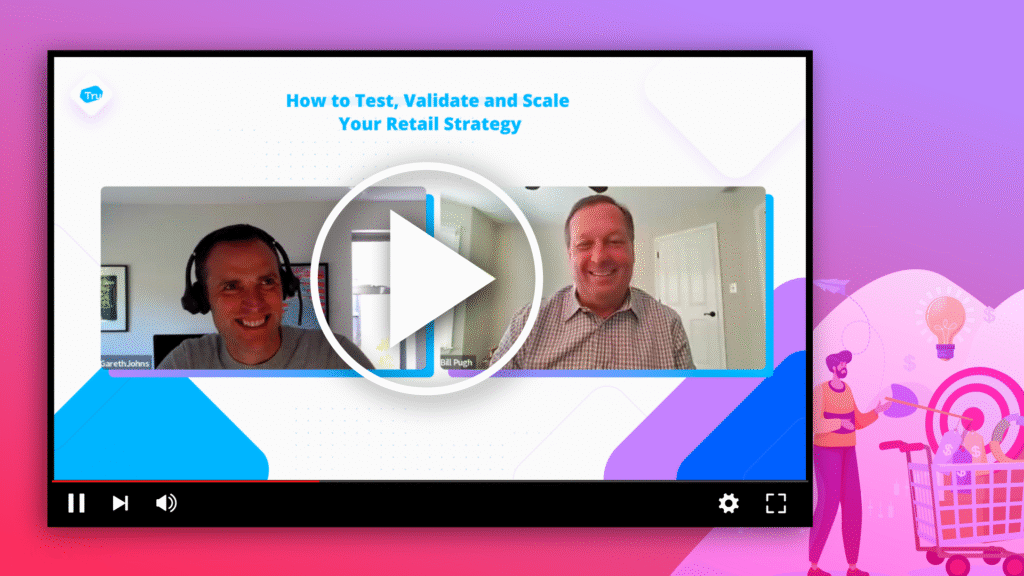
Retail strategy is rarely the hard part on paper. The harder question is whether that strategy works once it reaches stores, teams, customers, and local markets. That was the focus of our recent webinar with Bill Pugh, Senior Director of Store Operations at Paradies Lagardère, and Gareth Johns, Chief Customer and Data Officer at TruRating. The conversation explored how retailers can test new ideas, validate what is working, bring field teams along, and make better decisions before scaling across the estate.
Bill brought more than 30 years of retail and operations experience to the discussion, with a practical view shaped by one of the most complex retail environments in the industry. Paradies Lagardère operates across airport retail and dining, where customer missions shift constantly by format, terminal, country, traveller type, time of day, and season.
That complexity made the conversation especially useful. Because if a strategy can be tested, adapted, and scaled in an airport environment, there are lessons for any retailer trying to turn good ideas into consistent execution.
Watch the webinar
Key takeaways from the webinar
The clearest message from the session was that retail strategy needs to be tested in the real world before it scales. A plan can look strong at head office, but the real test is how it lands across formats, regions, teams, and customer missions. That might mean adapting between convenience, department stores, grocery, flagship stores, or local market formats.
Bill made the point early in the conversation. Paradies Lagardère has to think differently across its store types because the customer mission changes. In a Travel Essentials store, customers may be moving quickly and looking for specific items. In specialty retail, the challenge may be more about browsing, engagement, and conversion.
Gareth built on that by explaining how the commercial focus changes by format. In one environment, the opportunity may be increasing average basket size. In another, it may be improving conversion. That means the behaviors you measure, coach, and reinforce need to match the job each store is trying to do.
“If you’re thinking about a Travel Essentials store, most customers are focused on getting what they need and getting out again. The opportunity is to show that customer a couple of extra items or help them add another item to their basket. You’re really focused on increasing average basket size…. Whereas with specialty stores, you’re focused much more on conversion.”
— Gareth Johns, Chief Customer and Data Officer, TruRating
Why different store formats need different playbooks
One of the strongest points from the discussion was that retailers cannot assume one strategy will work everywhere. Bill described how Paradies Lagardère operates both Travel Essentials stores and specialty brands, including examples such as Brighton, Brooks Brothers, and Pandora. The point was not just that the stores look different. It was that the questions, behaviors, and success measures need to be different too.
A customer buying a bottle of water before a flight has a different mission from a customer browsing cosmetics. One may value speed, visibility, and ease. The other may need more engagement, advice, or confidence before buying.
That matters because many retail strategies fail by flattening those differences. A service model, campaign, staffing change, or product initiative may be right for one format and wrong for another. Or it may need to be adjusted before it scales.
“We have to think about what we’re doing and the questions that we’re asking differently across the formats.”
— Bill Pugh, Senior Director of Store Operations, Paradies Lagardère
For retailers, the lesson is simple. Strategy should not only be measured at the total estate level. It needs to be understood by format, by customer mission, and by the environment in which it is delivered.
Sales data shows what happened. Customer signal helps explain why.
Another strong theme was the limit of relying only on sales data, field observations, or occasional mystery shops. Bill was clear that Paradies Lagardère already had a strong service reputation before working with TruRating. The business had been recognized for customer service for many years, and leaders knew teams were doing a good job. But that did not mean they had the full picture.
They had a visibility gap. While they had observations from field teams and executives, plus mystery shops, they did not have a consistent, real-time view of what customers were experiencing across every store type and airport.
“We knew that we were doing a good job. Our business was good. But we still really weren’t getting the information that we needed to say, well, how are we doing?… What we’re able to do now is actually see what’s happening, what we’re doing well in, and where our opportunities are.”
— Bill Pugh, Senior Director of Store Operations, Paradies Lagardère
That distinction matters. Sales data can tell a retailer that a store performed well or underperformed. But it often cannot explain whether the issue was customer mission, staff behavior, store conditions, product availability, promotion visibility, or local context.
Customer feedback, collected in the moment and tied to the transaction, gives teams a clearer view of what happened around the sale. It helps retailers understand not just what sold, but what the customer experienced before they paid. That is where insight becomes useful. Not as another dashboard, but as a way to decide where to focus.
The strongest pilots are not rushed
When asked how Paradies Lagardère introduces something new, Bill came back to the discipline of piloting. For him, a pilot is not just a quick test. It needs enough time, enough scope, and enough variation to produce a reliable read. That means looking across different stores, concepts, regions, and countries where relevant.
“You’ve got to pilot. We have to test it, make sure that it works… What works in the U.S. doesn’t necessarily work in Canada, so we have to take that into consideration.”
— Bill Pugh, Senior Director of Store Operations, Paradies Lagardère
Bill also made a useful point that rushed pilots can give a false read because they do not account for seasonality, local differences, or the time it takes teams to understand and adopt a new initiative. He said Paradies Lagardère typically wants pilots to run long enough to understand what is really happening, often starting with a smaller group of stores and growing the base before moving to full scale.
“Where you’re most successful is where you put enough time into it. You’re not rushing something just to get it out… If you rush something out in under 90 days, you can’t really get a read for what’s going on, and you can’t get a read on the seasonality of the business.”
— Bill Pugh, Senior Director of Store Operations, Paradies Lagardère
Gareth added another important point that retailers often have several pilots running at once, which can make it difficult to know which initiative caused which result. Without proper orchestration, teams risk misreading success or failure.
“You really need to be measuring it before you make the change, during the change, and after the change, to see whether it had a lasting impact on how customers perceive the store and the store experience.”
— Gareth Johns, Chief Customer and Data Officer, TruRating
That is a key consideration for any retailer planning new formats, checkout changes, promotions, service models, loyalty initiatives, or store experience tests. A pilot should not simply prove that something happened. It should show whether the right customer behavior changed, whether the change was consistent, and whether the result is strong enough to scale.
Field buy-in is what turns rollout into execution
Perhaps the strongest lesson from Bill was about people. A strategy does not scale just because head office approves it. It scales when field teams understand why it matters, how it helps, and what role they play in making it work. Bill described the risk of initiatives being seen as “just another thing” coming from head office. When that happens, teams may comply, but they do not necessarily commit. That is where execution can break down.
“You have to get buy-in from those field teams, because the field team takes a lot of direction from the head office. In some cases, they’re asking, is this just busy work, or is this something that we really need to do and there’s a reason for it?”
— Bill Pugh, Senior Director of Store Operations, Paradies Lagardère
To avoid that, Paradies Lagardère brings field teams into the process. Bill talked about using regional captains to represent different parts of the business, share updates, ask questions, and bring peer perspective into the rollout. That peer-to-peer element matters. It makes the initiative feel less like a top-down instruction and more like something the field has helped shape.
“We don’t just drive things down from our operations team to the field. We include people within that process… We really think that helps us get better buy-in from the field, because it’s not just another thing they have to do. They’re getting perspective from their peers, not just somebody sitting at head office.”
— Bill Pugh, Senior Director of Store Operations, Paradies Lagardère
Retailers often talk about rollout as a project management exercise, whereas Bill framed it as a communication and adoption challenge. If teams do not understand the why, the execution will be weaker. If they are involved early, see the results, and understand the impact, they are more likely to make the change stick.
Customer feedback should help teams, not catch them out
Bill also spoke about staff comfort and how teams respond to customer feedback. His point was that feedback cannot feel like a “gotcha.” If store teams believe data is only there to catch mistakes, they will resist it. If they see it as a way to recognize what is working and identify where support is needed, it becomes more useful.
“Getting them out of the mindset that this is a gotcha is important. It’s more of, we’re going to catch you doing something right, and we’re going to help recognize you… The goal is not to get the hammer out. It’s to help teams understand where they’re doing well and where they have an opportunity.”
— Bill Pugh, Senior Director of Store Operations, Paradies Lagardère
Greeting customers, offering help, explaining an initiative, recommending an item, or making a customer feel welcome all depend on confidence, timing, and comfort. Gareth described this as both a compliance question and an impact question. First, is the behavior happening? Second, does it matter to the customer and the business outcome? That is where customer signals can make coaching more focused. It can show where a behavior is being delivered consistently, where it is not, and where it is linked to better outcomes.
“It is not just saying, this has been decreed and you need to do better. It is more, when you do this thing well, this is what customers notice, and this is how much more they spend or how much more likely they are to convert.”
— Gareth Johns, Chief Customer and Data Officer, TruRating
Local context changes everything
Airport retail gives a clear example of why local context matters. Bill talked through the many factors that shape customer behavior in airport stores.That level of variation means retailers cannot treat performance as if every location has the same starting point.
“Traveller mix has to play a factor. Business and leisure travel behave differently, and that changes by time of day, day of week, and season… The dynamics of what happens within our business and what our customers are looking for by day of the week, time of day, or even seasonally, makes a huge impact.”
— Bill Pugh, Senior Director of Store Operations, Paradies Lagardère
Gareth made the broader retail point that every store has external factors that shape performance, including local demographics, competition, customer income levels, price sensitivity, distance travelled, and the surrounding environment.
If those factors are ignored, teams may make the wrong diagnosis. A store may be blamed for underperformance when the real issue is customer mix, local context, or a format mismatch. Or a strong store may not be properly understood because its starting conditions are different.
Gareth described the value of comparing like with like. If a store manager can see how they operate against stores with similar conditions, the conversation becomes more useful and fair.
“If you can show a store manager another set of stores that are very like them, with very similar preconditions, then you can have a much more targeted conversation about why there’s a difference between the two stores.”
— Gareth Johns, Chief Customer and Data Officer, TruRating
The goal is not to remove accountability, but to make accountability smarter by using context, not just averages.
Marketing value goes beyond promotions
One of the more interesting parts of the discussion was how Bill described the role of marketing at Paradies Lagardère. In their environment, marketing is not only about store promotions, as it also plays a role in telling the company story, supporting business development, and helping Paradies Lagardère differentiate itself with airport partners.
Customer data becomes useful in those conversations because it gives the business a stronger way to show what it knows about travellers, store experience, and customer needs. Bill explained that the marketing team can use customer insight in discussions around renewals, new contracts, RFPs, and industry conversations. That is a strong reminder that customer signal is not just an operational tool. It can also support commercial strategy, brand positioning, and partner relationships.
He also made a powerful point about scale. Where a marketing team may once have wanted 1,000 or 2,000 responses, TruRating can help turn around that kind of response volume very quickly.
“We were not measuring our customer experience in a meaningful way forever. Now we’re getting hundreds of thousands of responses every week, and we will generate over 9 million responses in a year.”
— Bill Pugh, Senior Director of Store Operations, Paradies Lagardère
That scale changes what is possible as it gives teams a more representative view of what customers are saying, rather than relying on small panels, occasional studies, or anecdotal feedback.
The most surprising insight was hiding in a basic behavior
When asked what TruRating helped Paradies Lagardère see more clearly, Bill pointed to something simple: greeting. Paradies Lagardère already had a strong service reputation, but customer feedback showed that greetings were not happening consistently across every store. More importantly, the data helped connect that behavior to spend and gave teams a practical way to act.
“What was shocking to us was the number of times that we don’t greet the customer when they come into the store.”
— Bill Pugh, Senior Director of Store Operations, Paradies Lagardère
Bill explained that the value was not just knowing greeting needed to improve. It was being able to see which stores were doing it well, where there was opportunity, and when those patterns were happening. That changed the conversation with teams. Instead of saying “we need to do a better job greeting customers,” leaders could be much more specific.
“It was not just a general statement, hey, we’ve got to do a better job of greeting. It was, you’re doing a great job in these stores, and we have an opportunity in these stores.”
— Bill Pugh, Senior Director of Store Operations, Paradies Lagardère
That is where TruRating data becomes actionable, as it narrows the problem. It points to where support is needed and it helps teams recognize what is already working.
Bill also said the insight had helped Paradies Lagardère give the right information to the right audience, so they could build a plan and take action.
“I truly believe the information we were getting was giving us the right information to the right audience, to be able to have a plan and take an action that could influence the performance we were having in our stores.”
— Bill Pugh, Senior Director of Store Operations, Paradies Lagardère
Useful visibility matters more than more data
Gareth closed the discussion with a point that applies well beyond this webinar. Retailers are not short of data. In many cases, they have too much. The issue is knowing what to focus on. Dashboards, heat maps, KPIs, and reports can all be useful, but only if they lead to action. If store teams are given too many metrics, they may not know where to start. If leaders stop at data distribution, nothing necessarily changes.
“Very few people I talk to in retail say they haven’t got enough data. Most of the time, it’s, I’ve got too much data, I don’t understand the data I’ve got, I don’t know how to use it, and I don’t know what to focus on.”
— Gareth Johns, Chief Customer and Data Officer, TruRating
The goal is to move from broad visibility to focused action. Gareth described the need to identify the two or three things that matter most to customers, move revenue, represent a real opportunity, and can realistically be improved. That is the difference between having data and having useful visibility.
“Once you’ve got the data, you have to go the next stage, which is coach the teams, understand why they’re struggling, figure out how to help them, give them the confidence to improve, and recognize the ones that are doing well.”
— Gareth Johns, Chief Customer and Data Officer, TruRating
That is where the webinar came back to its central point. Strategy only works when it is delivered, and delivery only improves when teams can see what is happening, understand why it matters, and know what to do next.
Final thought
The pressure on retailers is not just to find new ideas, but to know which ideas are working, where they are working, and whether they are ready to scale. The conversation with Bill Pugh and Gareth Johns showed why that requires more than sales data, occasional store visits, or broad customer scores. Retailers need customer signal that is close enough to the moment to explain what actually happened. They need enough scale to see patterns by store, region, shift, and format. And they need to turn that signal into action for the teams who can make a difference.
That is where TruRating has a clear role to play. By capturing customer feedback at the point of payment and linking it to transaction data, TruRating helps retailers close the gap between strategy and execution, while teams see what is working, where it is working, and what is worth scaling.
With TruRating, retailers can capture feedback at the point of experience, see patterns by store and act before small issues become bigger performance gaps. Find out more about our POS feedback solution, or book a demo.
Useful resources
- Retail store staff training – tips and strategies
- Retail conversion analysis guide
- Customer retention in retail
- How to build customer loyalty in retail
- How to increase sales in retail
Retail Strategy FAQs
What is a retail strategy?
A retail strategy is the plan a retailer uses to attract customers, improve the shopping experience, drive sales and operate consistently across stores, channels or regions. In practice, a strong retail strategy also needs a way to test whether the plan is working before it is scaled.
Why is retail strategy important?
Retail strategy is important because it helps retailers make clearer decisions about where to invest, what to prioritise and how to improve performance. Without a clear strategy, teams can end up rolling out new initiatives without knowing whether they are right for the customer, the store format or the wider business.
What are the components of a retail strategy?
The main components of a retail strategy usually include customer experience, store format, pricing, promotions, merchandising, operations, staffing, location and performance measurement. For multi-site retailers, execution also matters. A strategy only works if it can be delivered consistently across stores, regions and formats.
What is an omnichannel retail strategy?
An omnichannel retail strategy connects the customer experience across physical stores, digital channels and other touchpoints. But it still has to work at store level. Retailers need to understand how customers behave in different environments and whether the in-store experience supports the wider brand and commercial plan.
What is a retail expansion strategy?
A retail expansion strategy is a plan for growing into new stores, regions, formats or markets. The risk is assuming that what worked in one location will work everywhere. Testing and validating customer response before wider rollout can help retailers expand with more confidence.
How do you develop a retail strategy that works across different stores?
To develop a retail strategy that works across different stores, retailers need to combine commercial goals with local insight. That means understanding customer behavior, store format, team execution and operational constraints before making wider rollout decisions. Customer feedback can help show where a strategy is landing and where it needs to be refined.
How can retailers improve their retail execution strategy?
Retailers can improve retail execution strategy by making it easier to see what is actually happening in stores. That includes tracking whether teams are adopting new initiatives, whether customers notice changes and whether performance varies by location, shift or format. Better visibility helps teams focus on the actions that matter most.
What is a retail marketing strategy?
A retail marketing strategy is the plan a retailer uses to attract customers, communicate value and influence buying behavior. For it to work, the in-store experience has to support the message. Customer feedback can help retailers understand whether promotions are visible, understood and influencing behavior in the way they intended.
Why should retailers validate a strategy before scaling it?
Retail strategies do not always perform the same way across every store, format or region. Validating a strategy first helps retailers understand whether the idea is landing with customers, whether teams can execute it consistently and whether it is likely to improve commercial outcomes.
Who is this retail strategy webinar for?
This webinar is for retail leaders responsible for testing, improving and scaling strategy across multiple stores, formats or regions. It will be useful for teams focused on store performance, customer experience, marketing, operations, field execution and growth.