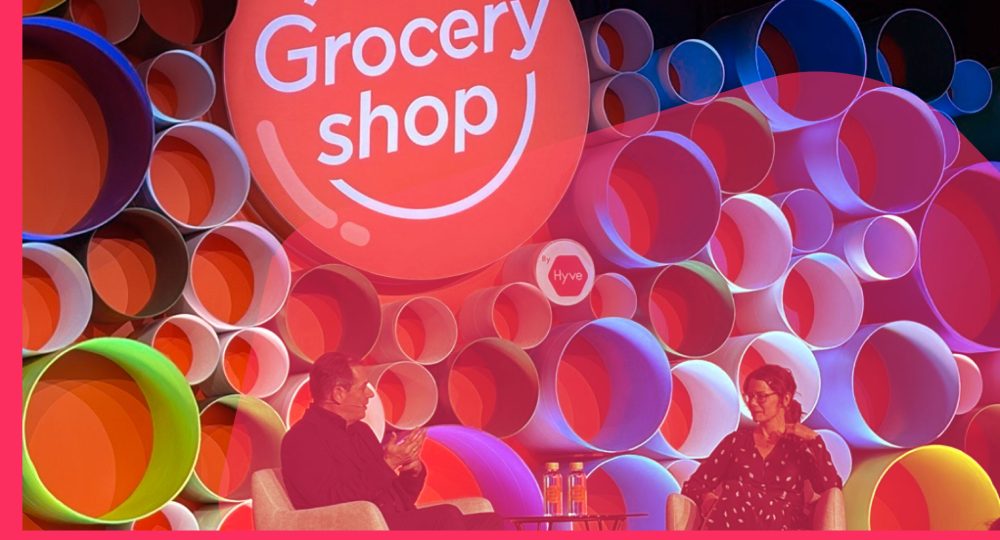

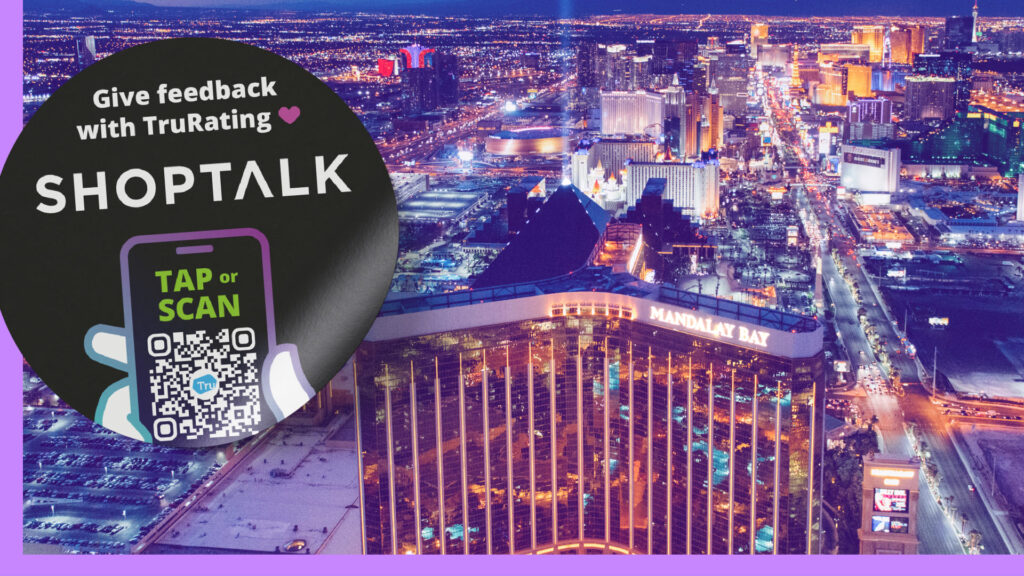
ShopTalk Spring 2026 brought more than 10,000 retail decision-makers to Mandalay Bay in Las Vegas from March 24–26, for three days of meetings, content, and conversation about what comes next in retail. The event agenda reflected where the market is right now: AI, customer connection, operational execution, and the growing pressure on retailers to move faster with more confidence. That made it the right place to put Tap to Rate, to work.
This year, TruRating’s Tap to Rate technology was used across key moments of the live event experience. And that matters, because events like ShopTalk have the same problem many retailers have in-store – plenty of activity, plenty of opinion, but very little real-time visibility into how the experience is actually landing while it is still happening.
A simple idea, used where it matters most
At ShopTalk, Tap to Rate touchpoints were placed in key areas where attendee experience could be captured in the moment. That included arrival at registration, shared moments like lunch, and content touchpoints such as panels and sessions.
The mechanic is deliberately simple. Attendees tap or scan their phone on a Tap to Rate stand or sticker, answer one question in their browser, and move on. If they want to say more, they can also leave open-text feedback. That simplicity make ittlowers effort, removes friction, and makes it possible to capture feedback wherever a sticker can be placed or a stand can be set up.
That is what made it work so well on the show floor. It did not ask people to stop what they were doing and fill in a long form. It met them in the flow of the event. On the way in. Between sessions. After a panel. Over lunch. Right at the moment when the experience was still fresh.
Why this mattered at ShopTalk
Most event feedback arrives too late to be useful. A survey lands in an inbox after the event ends. Response rates are low. Memory is patchy. And the feedback usually comes from the people who felt strongly enough to respond, not from the broader mix of people who actually moved through the event. Tap to Rate changes that model.
Instead of waiting for a retrospective summary, it creates a live signal loop. It captures what people thought at a specific moment, in a specific place, while the experience was still unfolding.
That was the real story at ShopTalk. The success of Tap to Rate was not just that attendees used it. It was that it proved how quickly simple, in-the-moment feedback can become operationally useful. It gave visibility into how core parts of the event were performing while there was still time to learn from them.
From registration to panels, a clearer picture of the live experience
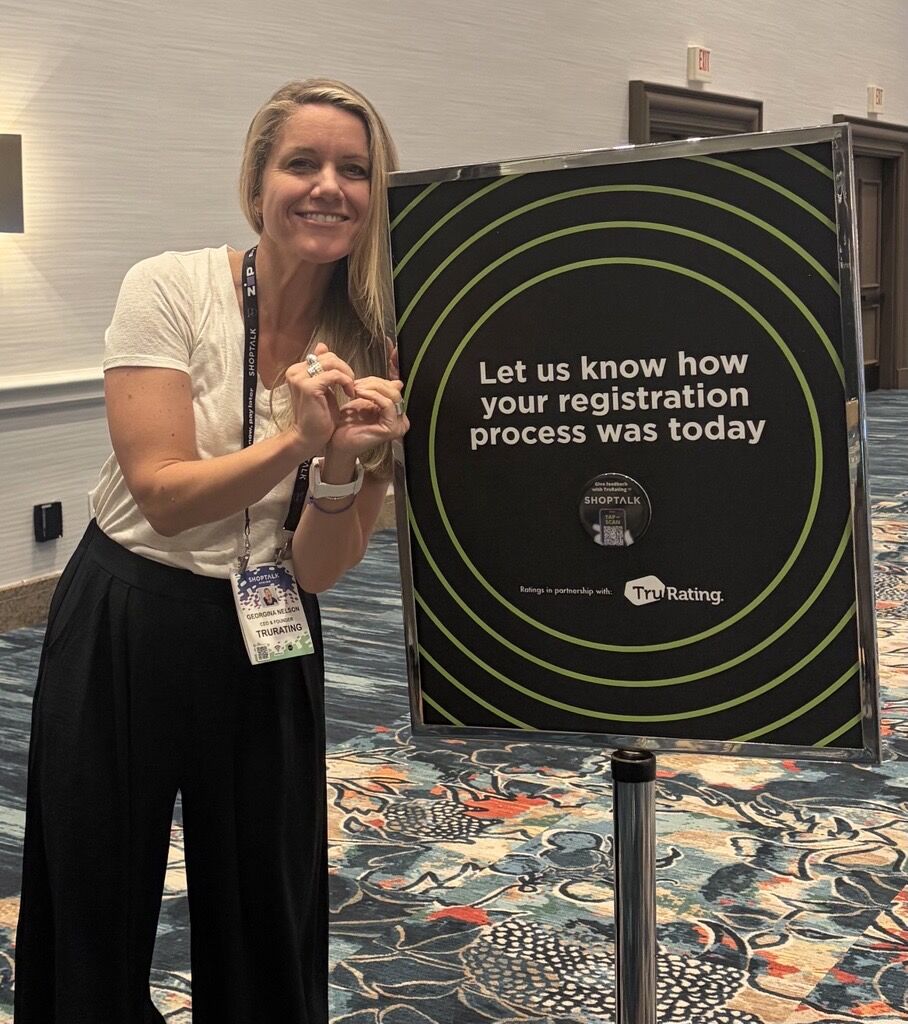
Placed at registration, Tap to Rate helped capture first impressions at the point of arrival. That matters more than people think. Registration sets the tone. It is the first operational test of the event, and often the first moment where friction shows up.
Placed around lunch, it created a read on a very different part of the experience: flow, convenience, and the operational quality of a high-volume shared moment. These are exactly the kinds of touchpoints that can make or break how an attendee feels about a day, even if they are not what the agenda is built around.
Placed around panels and session areas, it helped connect feedback directly to content moments. Not later. Not from memory. Right as attendees left the room.
Taken together, those touchpoints created something much more useful than a broad event satisfaction score. They created location-specific, moment-specific visibility into what was working, where friction appeared, and how the live experience varied across the day. That is a much more actionable kind of insight.
More than event feedback
What ShopTalk showed is that Tap to Rate is not just a neat event tool. It is a practical way to capture customer signal in places where traditional feedback methods fall short. That is true on the show floor, and it is just as true in retail.
Tap to Rate can be placed almost anywhere: on a stand, a sticker, a counter, a collection point, a table, a service desk, or an exit path. It gives businesses a way to capture feedback at specific touchpoints across the journey, including moments that happen away from checkout.
That matters because, firstly, it helps businesses understand non-purchasers, not just buyers. Someone who walks the floor, visits a department, collects an order, or leaves without buying still has something valuable to say. Traditional point-of-payment feedback will miss that. Tap to Rate does not.
Secondly, it helps isolate specific parts of the experience. That could be BOPIS collection, a service desk, a product area, or a campaign execution point in-store. Instead of asking a broad question about the whole journey, brands can ask one focused question at the exact moment they need to understand.
Thirdly, it bridges qualitative and quantitative feedback. A customer can answer one structured question quickly, then add open text if they choose. So you get scale, but you also get context.
And finally, once that data flows into TruHub alongside feedback captured at the point of payment, it becomes part of a much broader picture of customer experience and performance.
What the show floor demonstrated
Retail leaders are under pressure to validate initiatives faster, improve consistency across locations, and detect friction earlier. Tap to Rate showed how fast feedback can be captured when the experience is still live. It showed how simple infrastructure can create useful signal in high-traffic environments and how a single-question feedback moment can do more for decision-making than a long survey sent after the fact.
Very simply, listening works better when it happens in the moment. Tap to Rate made it easy for attendees to respond at the moments that mattered. And in doing so, it gave a clearer view of the event as it was being experienced in real time.
Whether it is on a show floor, at a service desk, in a pickup area, or at the point of payment, better signal leads to better action. And better action is what drives better outcomes. Thank you to the ShopTalk team for having us, and to everyone who tapped, scanned, and shared feedback across the event.
If you’re interested in bringing this same approach to measuring customer or attendee experience into your own business, we will be happy to show you how it works. Get in touch with us today.