

Learning how to increase ATV in retail starts with a simple goal: help each customer make a more useful, higher-value purchase. You can increase average transaction value in retail through relevant upselling, cross-selling, stronger product recommendations, better frontline coaching, and careful use of bundles and promotions.
The most effective approach is not to push every customer to spend more. It is to identify the products, service behaviors, and decision points that genuinely add value, then deliver them consistently across every store and shift.
Average transaction value, or ATV, is the average amount spent in each transaction. New to the metric? Read our full guide to what ATV means in retail, including the formula and calculation.
Download the guide to improving ATV
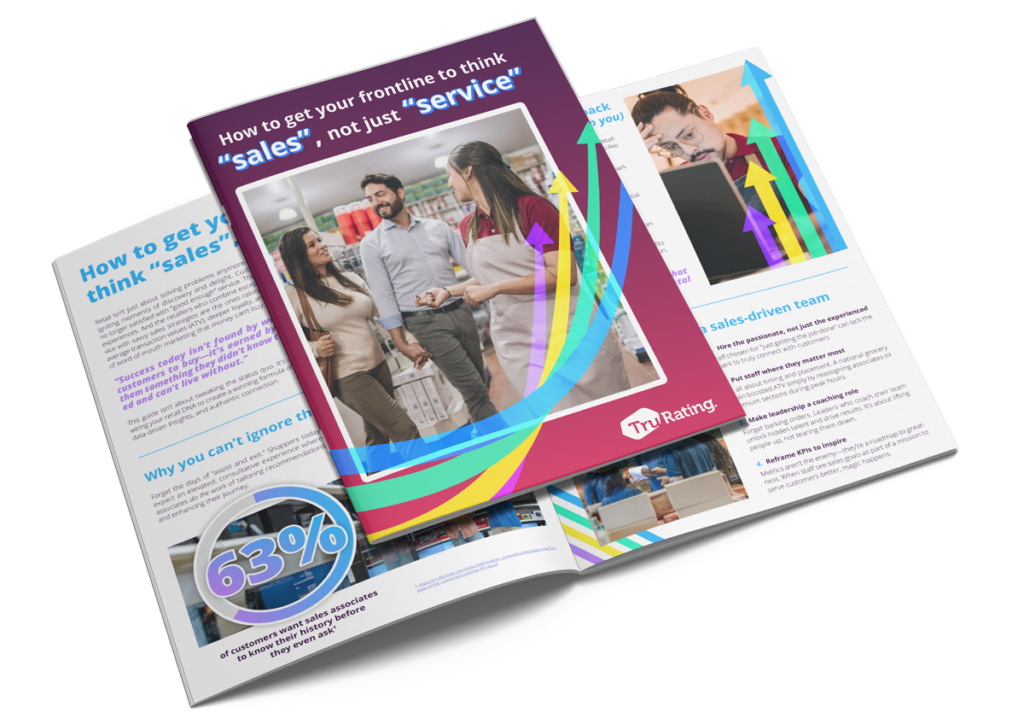
Improving ATV depends on what happens between the customer and your frontline team. Our guide, “How to get your frontline to think ‘sales’, not just ‘service’,” explains how retailers can move from reactive service to confident, proactive selling.
It covers how to:
- Help associates recognize relevant sales opportunities
- Build upselling and cross-selling into natural customer conversations
- Use customer insight to identify the behaviors that influence spend
- Coach store teams around measurable commercial outcomes
- Improve consistency across locations, regions, and shifts
How can retailers increase ATV?
Retailers can increase ATV by making relevant product recommendations, offering complementary items, presenting useful upgrades, creating well-designed bundles, and improving frontline product knowledge.
The key is consistency. A sales behavior may work well when it happens, but it will have limited impact if it is only delivered in a small number of stores or during certain shifts.
The following seven strategies can help retailers improve average transaction value without turning the customer experience into a hard sell.
1. Turn customer service into sales-focused support
To improve ATV in retail, frontline teams need to do more than answer questions and complete transactions. They need the confidence to help customers make decisions, discover suitable products, and understand the value of different options.
Sales-focused service does not mean using a fixed script. It means listening to what the customer needs and responding with useful guidance.
Associates can start by:
- Asking one clear question about the customer’s needs
- Explaining the differences between relevant products
- Recommending an item that solves an additional problem
- Showing how two products work together
- Offering a better option when the added value is clear
For example, an associate helping a customer choose running shoes might also ask where and how often they run. That creates an opportunity to recommend the right level of support, rather than simply pointing to the cheapest or most popular pair.
2. Identify which frontline behaviors increase spend
Understanding how to improve average transaction value requires more than tracking the final sales number. Retailers also need to understand what happened during the interaction.
Transaction data shows that one store has a higher ATV than another. But it does not explain whether the difference came from better product knowledge, more frequent recommendations, stronger product demonstrations, different stock availability, or a more effective store layout.
Retailers should test specific customer-facing behaviors and compare them with transaction outcomes. Questions might include:
- Did a team member suggest an additional item?
- Were the product’s main features explained?
- Were you offered help when you needed it?
- Did a team member show you how the product works?
- Were you told about a relevant premium option?
This turns general service expectations into behaviors that can be measured and coached.
Proof that a simple behavior can affect ATV
Paradies Lagardère used TruRating to measure whether customers received an item suggestion and connect the answer to transaction spend.
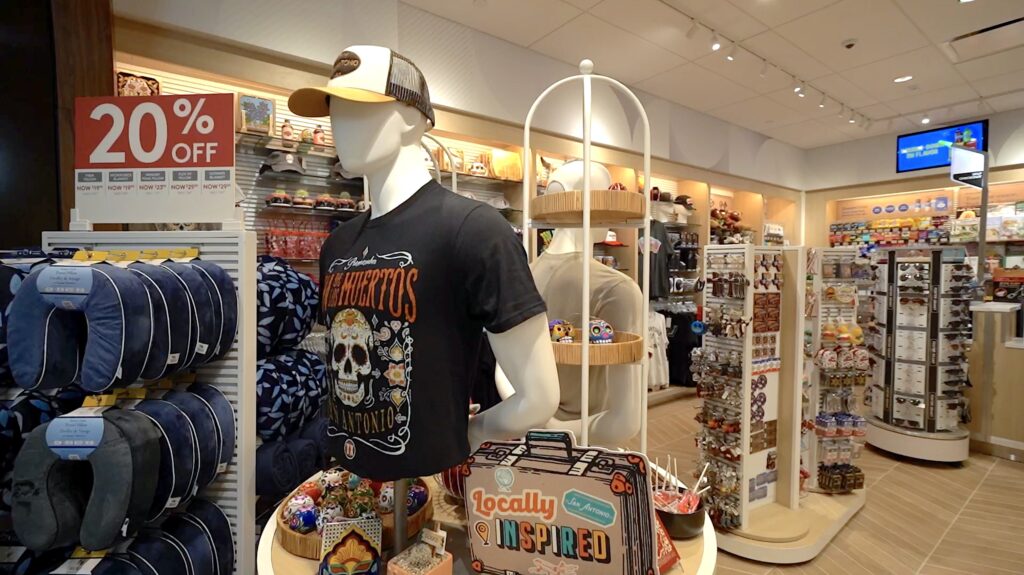
Customers who received a suggestion spent 10% more per transaction than those who did not. The analysis also found that execution varied significantly between locations, creating an estimated $1.8 million recoverable revenue opportunity through more focused coaching.
The behavior was already part of the retailer’s service model. The opportunity came from identifying where it was not happening consistently.
3. Use upselling and cross-selling in the right situations
Smart upselling and cross-selling are among the most practical strategies to increase average order value and ATV. But the recommendation needs to be relevant to the customer’s original purchase.
The difference is simple:
- Cross-selling means recommending a complementary product, such as socks with shoes or batteries with an electronic device.
- Upselling means recommending a higher-value version of the product, such as a more durable appliance or a larger product size.
Good upselling helps the customer understand why the higher-priced option may be more suitable. Good cross-selling helps them complete the purchase or get more value from it.
Retail teams should avoid overwhelming customers with several unrelated suggestions. One clear and useful recommendation is usually more effective than a long list of add-ons.
Associates should be able to explain:
- What the additional product does
- Why it is relevant to the customer
- How it improves the main purchase
- What additional value the premium option provides
- When the customer may not need it
That final point matters. Customers are more likely to trust future recommendations when associates do not push products that offer little value.
4. Increase UPT with complementary products and bundles
Retailers asking how to increase UPT in retail should focus on products that naturally belong together. Units per transaction measures the number of items in the average basket, while ATV measures the financial value of that basket.
The two metrics often move together. When customers add relevant items, both UPT and ATV may increase. But a higher UPT does not always guarantee better revenue or margin, especially when the additional products are heavily discounted.
Ways to encourage useful additions include:
- Merchandising complementary products together
- Creating bundles around a common customer need
- Placing useful add-ons near the point of decision
- Giving associates category-specific recommendation prompts
- Highlighting products that prevent a second trip
- Making bundle savings clear and easy to understand
A bundle should make the purchase easier, not simply combine products that the retailer wants to clear.
For example, an electronics bundle might include a device, protective case, and charging accessory. A beauty bundle might bring together products from the same routine. Both help the customer complete a task while increasing basket size.
5. Personalize recommendations using customer insight
Personalized service can increase average transaction value when it makes the shopping experience easier and more relevant.
This does not require associates to know every detail about the customer. Simple context can improve the quality of a recommendation:
- What is the customer buying the product for?
- Is it for personal use or a gift?
- Have they used a similar product before?
- What features matter most to them?
- Is price, quality, convenience, or durability their main priority?
Customer insight can also help retailers understand which recommendations work best across different store formats, regions, customer missions, and times of day.
For example, a recommendation that performs well in a destination store may be less suitable in a high-speed travel or convenience environment. Retail benchmarking should account for these differences rather than applying the same ATV target and sales playbook everywhere.
6. Use discounting without weakening margin
To increase average transaction value without giving away profit, retailers need to judge promotions by more than the size of the basket.
Discounting can raise ATV when it encourages customers to buy more items or move into a higher spending band. But it can also reduce gross margin, train customers to wait for promotions, or reward purchases that would have happened anyway.
Before expanding a discount, retailers should measure:
- The change in ATV
- The change in UPT
- The gross margin per transaction
- The number of discounted items
- Whether full-price products were displaced
- Whether customers returned after the promotion
- Whether results varied by store or customer segment
Threshold promotions, such as receiving a benefit after spending a certain amount, can increase basket size. But the threshold needs to be close enough to the customer’s normal spend to feel achievable.
Bundles can provide a stronger alternative when they offer genuine convenience and protect more margin than a storewide discount.
7. Measure ATV alongside other retail KPIs
Retail KPIs such as ATV, UPT, conversion rate, gross margin, and execution consistency should be reviewed together. Looking at ATV alone can hide important changes in customer behavior or store performance.
| Retail metric | What it tells you |
|---|---|
| Average transaction value | The average revenue generated by each transaction |
| Units per transaction | The average number of products in each basket |
| Conversion rate | The percentage of store visitors who make a purchase |
| Gross margin per transaction | Whether higher-value baskets are also profitable |
| Behavior execution rate | How consistently teams deliver a target sales or service behavior |
| Return or repeat visit rate | Whether the experience supports longer-term customer value |
For example, ATV may rise while conversion falls. This could mean that the retailer is serving high-value customers well but losing customers with smaller or less certain purchase missions.
Similarly, UPT may increase because of heavy discounting while margin per transaction remains flat. Looking at the full set of retail performance indicators gives teams a more accurate view of what changed.
A practical plan to improve ATV in retail
A simple test-and-learn process can make ATV improvement more manageable.
1. Establish a baseline
Measure ATV, UPT, conversion, and margin by store, region, daypart, and shift. Avoid relying only on a company-wide average.
2. Choose one behavior
Select a specific behavior that could influence basket size, such as making an item suggestion, explaining product benefits, or offering a relevant premium alternative.
3. Measure whether it happens
Use customer feedback or another reliable measurement method to see how consistently the behavior is delivered.
4. Link the behavior to outcomes
Compare transactions where the behavior happened with those where it did not. Check the effect on ATV, UPT, conversion, and margin.
5. Coach the stores with the clearest opportunity
Do not give every store the same action plan. Focus coaching on the locations, shifts, or teams where execution is weakest and the potential commercial impact is strongest.
6. Track whether the change lasts
Review performance over time. A short-term improvement is useful, but the real value comes when the behavior becomes part of normal store execution.
Turn ATV insight into store-level action
Retailers often know which frontline behaviors should influence spend. The harder task is seeing whether those behaviors happen consistently and proving that coaching improved the commercial outcome.
TruRating captures customer feedback at the point of payment and links it to transaction data. Retail teams can use that connection to identify which experiences and frontline behaviors affect ATV, compare execution across stores and shifts, and give managers a clear coaching priority.
Rather than telling every location to “sell more,” teams can see where the opportunity exists, what behavior needs to change, and whether the action produced a measurable result.
See how TruRating connects frontline behavior to revenue
Build a repeatable approach to increasing ATV
The retailers that improve ATV consistently do not rely on one-off sales pushes. They identify what customers value, measure the behaviors that influence the basket, and help store teams repeat those behaviors consistently.
Start with one customer need, one frontline behavior, and one clear measure of success. Then compare results across stores and shifts, learn from the strongest performers, and target coaching where it will have the greatest impact.
Download “How to get your frontline to think ‘sales’, not just ‘service’” for a practical framework to help frontline teams make better recommendations, increase basket value, and connect service behaviors to measurable retail performance.
Useful resources
- Coaching behaviors that drive higher spend: Paradies Lagardère case study
- How to increase sales in retail: 24 practical strategies
- Retail store staff training: tips and strategies
- Retail metrics: 27 key metrics for your business
- Customer insight analysis: strategies and techniques
- Retail conversion guide: definition, formula, benchmarks and fixes
- What is ATV in retail? Formula and meaning
Frequently asked questions
Answers to common questions about increasing average transaction value in retail.