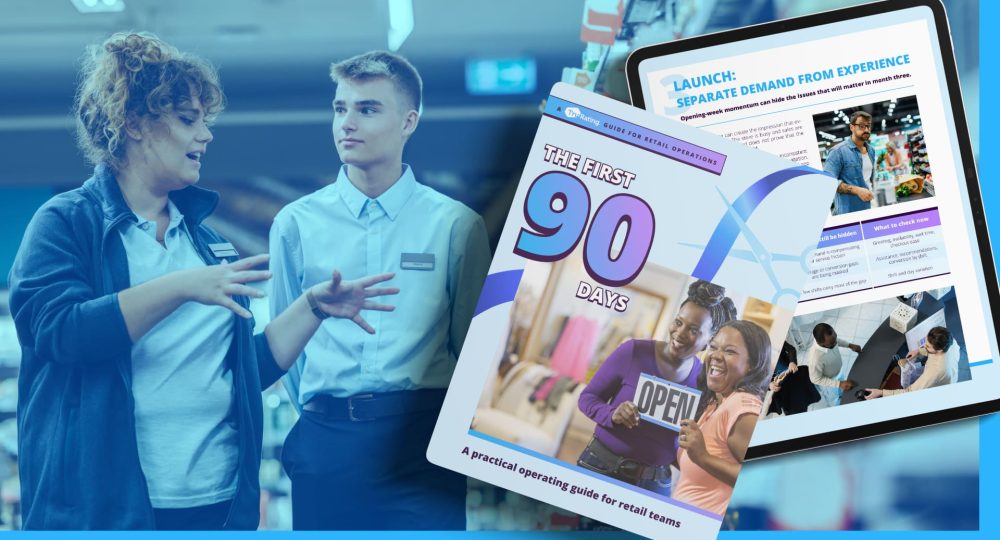


Building customer loyalty in retail is more critical than ever before. As 37% of consumers report decreasing loyalty to brands, it’s clear that businesses must do more than just attract new customers; they must retain them.
Our latest guide explores key strategies for building customer loyalty in retail, driving engagement, and fostering long-term relationships. We also introduce new approaches to measuring and optimizing loyalty strategies you can implement in your business.
Download the customer loyalty guide
Dive deeper into proven strategies for building customer loyalty in retail.
Download: Mastering customer loyalty – how to turn first-time shoppers into lifelong fans.
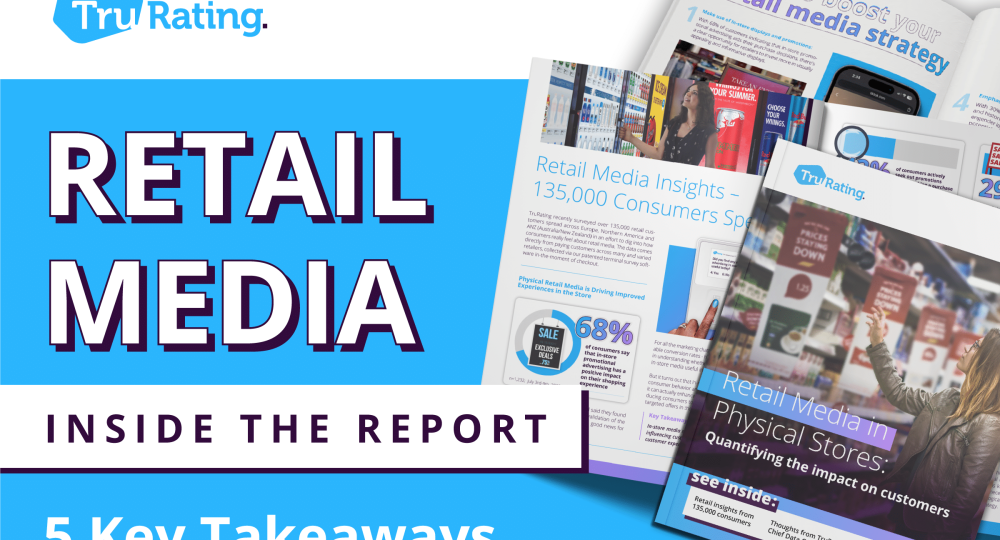
Key takeaways
- Access exclusive insights from real customers. Get the latest TruRating polling data and uncover what truly drives loyalty in today’s retail environment.
- Explore the power of personalized experiences. Understand how standout service and tailored interactions keep shoppers coming back for more.
- Discover how loyalty programs can do more than offer discounts. Find out how to create emotional connections and integrate benefits seamlessly across all shopping channels.
- Learn how to use data to optimize retail success. By using real-time customer insights you refine your retail customer loyalty strategy.
- Measure loyalty to fuel long-term growth. Find out what key metrics you should be tracking to ensure continuous improvement and sustained success.
- Gain best practices from industry leaders. Learn actionable strategies provided by Gareth Johns, TruRating’s Chief Customer Officer, on building meaningful customer relationships.
What is customer loyalty in retail?
Customer loyalty in retail refers to a shopper’s willingness to repeatedly return to a store or brand due to positive experiences, trust, and perceived value. It goes beyond transactional relationships and extends into emotional connections that keep consumers choosing your business over competitors.
Whether it’s through exceptional customer service, personalized marketing strategies, or well-designed loyalty programs in retail, fostering brand loyalty is essential to long-term success.
Why customer loyalty is declining in retail
Customer loyalty in retail is declining because the customer mindset has changed. Deloitte’s 2026 Retail Industry Global Outlook points to a consumer who feels more financially constrained and less able (or willing) to increase spending. When budgets tighten, shoppers behave differently. They compare more, they trade down, and they switch retailers with less hesitation.
This report also frames value-seeking as a lasting shift, not a temporary phase. That matters because it makes loyalty more conditional. Customers still have favourites, but they’ll move for better value, clearer pricing, or a smoother trip. And in a value-driven market, small frictions carry more weight. Long queues, unclear promotions, and inconsistent service don’t just annoy people, they become reasons to change routines.
On the retailer side, that means moving “from experimentation to execution.” As more retailers sharpen delivery and focus on operational discipline, the tolerance for inconsistency drops. If one store delivers and another doesn’t, customers stop trusting the brand experience. That’s when loyalty starts to fade, often before it shows up in your sales numbers.
Importance of customer loyalty to a retail business
Loyal customers are more than just repeat buyers. Here are some reasons why customer loyalty is vital to retail businesses and why you need to read our guide:
- Higher CLV – loyal customers spend more over time, increasing profitability.
- Reduced acquisition costs – retaining existing customers is far more cost-effective than acquiring new ones.
- Retail brand advocacy – happy customers spread the word, bringing in new shoppers organically.
- Greater resilience – in economic downturns, loyal customers are more likely to stick with your brand.
Download the guide and improve your customer loyalty strategy.
Customer loyalty and customer loyalty programs
One of the key topics we discuss in the guide is loyalty programs. While traditional loyalty programs offer points, discounts, or rewards, retailers must rethink whether these build loyalty and customer retention.
In the guide, we provide strategies to help you:
- Go beyond discounts and offer experiences
- Integrate loyalty benefits all sales channels
- Use customer data to personalize experiences
- Provide added value beyond simple discounts
How to measure customer loyalty in retail
Measuring customer loyalty is essential to understanding what works, identifying areas for improvement, and ensuring long-term business growth. By tracking key metrics, you can gain valuable insights into customer behavior, satisfaction, and engagement.
1. Repeat purchase rate
Repeat purchase rate measures the percentage of customers who buy more than once within a defined time period. A basic formula looks like:
Repeat Purchase Rate =
(Number of customers who purchased more than once ÷ Total customers) × 100
This is a strong “headline” loyalty indicator, but it’s not enough on its own. You need to break it down by store, region, and time window. Otherwise, you end up averaging out real problems. If repeat purchase rate declines in a handful of stores, that’s not a marketing issue. It’s an execution issue. And it needs store-level action.
2. Customer satisfaction metrics
Understanding customer satisfaction is critical to building lasting loyalty. Surveys, online reviews, and feedback tools help retailers assess how well they are meeting customer expectations.
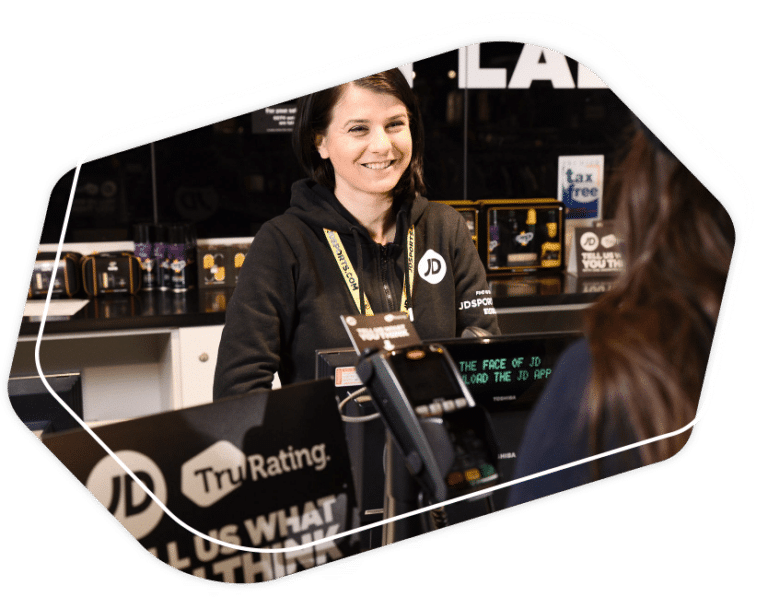
TruRating’s POS feedback solution allows you to capture instant feedback from customers at the point of sale, providing real-time insights into what drives satisfaction and loyalty. By leveraging this data, you can identify trends, address concerns, and enhance the overall shopping experience.
3. Visit frequency trends
Visit frequency is one of the cleanest signals for silent churn. If customers are visiting less often, the loyalty story is already changing. Frequency helps you spot:
- early decline before it becomes a revenue drop
- regional differences in experience consistency
- seasonality effects vs. true churn risk
- the impact of service improvements over time
Frequency trends are especially important in value-driven markets. Customers may still like you, but they reduce visits and “mix in” competitors to manage budgets. This is why loyalty measurement needs to go beyond surveys and membership analytics.
3. Customer Lifetime Value (CLV)
Customer lifetime value (CLV) is the financial anchor for loyalty. It captures the long-term value of keeping customers, not just acquiring them. A simplified CLV formula:
CLV = Average Transaction Value × Purchase Frequency × Customer Lifespan
CLV improves when customers return more often, spend more per visit, or stay active longer. For CX leaders, CLV is how loyalty work becomes defendable. It links experience improvements to business outcomes. For marketing leaders, it validates retention investment. For store operations leaders, it connects execution consistency to long-term performance.
4. Average Transaction Value (ATV)
Average transaction value (ATV) is often overlooked in loyalty conversations, but it’s a practical, measurable indicator of engagement and service effectiveness. ATV tends to rise when:
- staff make relevant recommendations
- customers feel supported (so they browse more)
- promotions are clear and trusted
- the store experience encourages add-ons
ATV is also useful because it can move faster than repeat rate. A service improvement might lift ATV immediately, while repeat behavior takes longer to shift. Tracking ATV by store and shift helps you see where service behaviors are translating into commercial impact.
Transform your customer loyalty strategy with TruRating
Building customer loyalty is only effective when backed by real insights. TruRating’s customer feedback platform gives you a direct line to your customers, capturing real-time feedback at the point of sale.
- Unmatched response rates – hear from 80%+ of your customers.
- AI-powered insights – identify trends and pinpoint what truly drives loyalty.
- Actionable data – equip your teams with the insights they need to enhance CX in real time, so you can drive lasting loyalty.
With TruRating, you can measure, optimize, and prove the impact of your loyalty initiatives, all while delivering an experience that keeps customers coming back. Speak to our team today to learn more.
Maximize repeat sales and brand loyalty
Make data-driven decisions that increase customer retention and loyalty. Download: Mastering customer loyalty – how to turn first-time shoppers into lifelong fans.
Useful resources
- Retail store staff training – tips and strategies
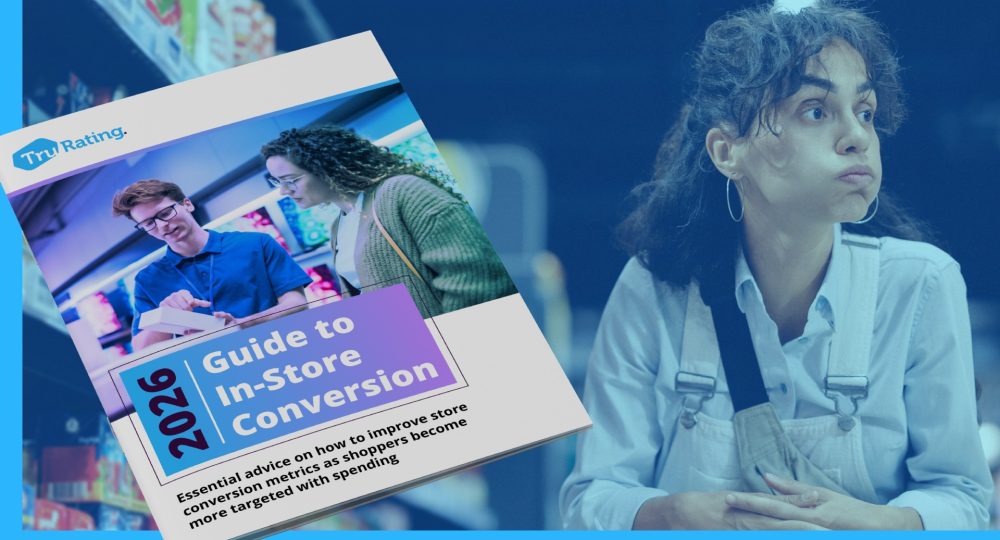
- Retail conversion analysis guide
- Customer retention in retail
- How to increase ATV in retail
- Customer insight analysis – strategies and techniques
FAQs
How can retailers increase repeat customers without relying on discounts?
Retailers increase repeat customers by making the next visit feel easy and worth it. That usually means reducing friction (queues, confusion, out-of-stocks), improving service consistency, and using relevant personalization. Discounts can drive short-term visits, but repeat behaviour is more likely when customers trust the experience will be consistent every time.
What makes customers loyal to a retail brand in 2026?
Customers stay loyal when they feel they get reliable value, not just low prices. Value includes convenience, smooth execution, friendly staff, and confidence that promotions and pricing are fair. In a value-seeking market, loyalty is often earned through consistency rather than brand love.
How do you calculate retail customer retention rate?
Retail customer retention rate is usually calculated over a defined period:
Retention Rate =
((Customers at end of period − New customers acquired) ÷ Customers at start of period) × 100
It’s useful to pair this with visit frequency trends, because retention can look stable while frequency drops (a common early sign of silent churn).
What are the best customer loyalty metrics for retail teams to track weekly?
If you want a weekly view that supports fast action, focus on metrics that move quickly and point to execution:
- Visit frequency trends (by store and region)
- Average transaction value (ATV) (by store and shift)
- Real-time customer satisfaction signals at checkout
- Repeat purchase rate (tracked consistently
What is “silent churn” and how do retailers reduce it?
Silent churn is when customers stop returning without complaining. It often shows up first as reduced visit frequency or smaller baskets. Retailers reduce silent churn by detecting experience issues early (store by store, shift by shift), fixing the main friction points, and coaching frontline behaviours that drive repeat visits.
How do loyalty programs increase customer lifetime value (CLV)?
Loyalty programs increase CLV when they change behaviour over time, not just when they hand out discounts. The biggest CLV gains usually come from encouraging repeat visits, increasing basket size through relevant rewards, and building habitual engagement. If a program mainly drives price sensitivity, it can increase costs without improving long-term loyalty.
What’s the difference between customer satisfaction and customer loyalty?
Customer satisfaction is how a customer feels about a single interaction. Customer loyalty is what they do over time. A customer can be satisfied and still switch retailers if another option feels better value or easier. Loyalty is best measured through repeat behaviour such as visit frequency, repeat purchase rate, and CLV.
How long does it take to improve customer loyalty in retail?
Some indicators move quickly, like ATV and immediate satisfaction signals. Repeat behaviour takes longer, because it depends on customers making multiple decisions over time. Many retailers see early movement within weeks (especially in store-level execution), but meaningful improvement in repeat visits and CLV typically requires consistent focus across multiple trading cycles.
What are common reasons loyalty initiatives fail in retail?
Loyalty initiatives often fail because they aren’t measured properly or aren’t operationalised in-store. Common issues include inconsistent frontline execution, over-reliance on discounts, measuring only loyalty members, and using lagging survey data that doesn’t support fast action. Loyalty improves when teams can see what’s happening by store and fix problems quickly.
How do you prove ROI on customer loyalty initiatives?
To prove ROI, link loyalty activity to measurable outcomes like visit frequency, repeat purchase rate, ATV, and CLV. The clearest proof often comes from comparing stores or periods where execution improved versus control groups, then tying those changes to revenue impact. Real-time customer insight helps shorten the feedback loop so improvements can be validated faster.