
Fortnum & Mason has spent more than 300 years building a reputation around in-store customer experience. For the British luxury retailer, the store is not just a place to transact, but the primary way the brand is experienced. That focus hasn’t changed. What has changed is how experience is measured, understood, and improved at scale.
Like most retailers, Fortnum & Mason had no shortage of customer feedback. What was harder to come by was timely, actionable insight. Traditional customer experience programmes tend to rely on surveys, complaints, and post-visit sentiment, which means issues surface long after the moment that shaped the customer’s decision to spend, return, or disengage. By the time problems appear in promoter scores or reviews, the commercial impact has often already occurred.
What Fortnum & Mason wanted instead was a clearer view of what was happening on the shop floor as it happened. Not aggregated sentiment, but real visibility by store, by shift, and by moment. That need sits at the heart of why their approach to customer experience is so instructive for other retailers.
In our recent webinar, leaders from Fortnum & Mason discussed what it really takes to deliver a consistent customer experience across a complex retail operation. The conversation focused on how stores bring the brand to life through people, how frontline behaviours influence spend and loyalty, and how leaders can intervene before performance slips.
Watch The Better Way of Doing CX with Fortnum & Mason
From customer sentiment to performance intelligence
As Sean Ghouse, Director of UK Retail at Fortnum & Mason, put it:
“I think post COVID, what we really saw was the importance of a psychological and social experience of what a store provides to the human element of what we all want to be connected to each other. And for me, the store plays such an important role in coming in and experiencing the brand in its truest light through the people that are passionate about it.”
That belief underpins Fortnum & Mason’s view of customer experience, but belief alone doesn’t create consistency. To do that, leaders need visibility.
Why real-time customer experience feedback matters
Historically, capturing actionable feedback at the point of purchase was difficult. Surveys were slow, response volumes were low, and insights often arrived too late to change outcomes. Store teams rarely had access to feedback while the trading day was still underway.
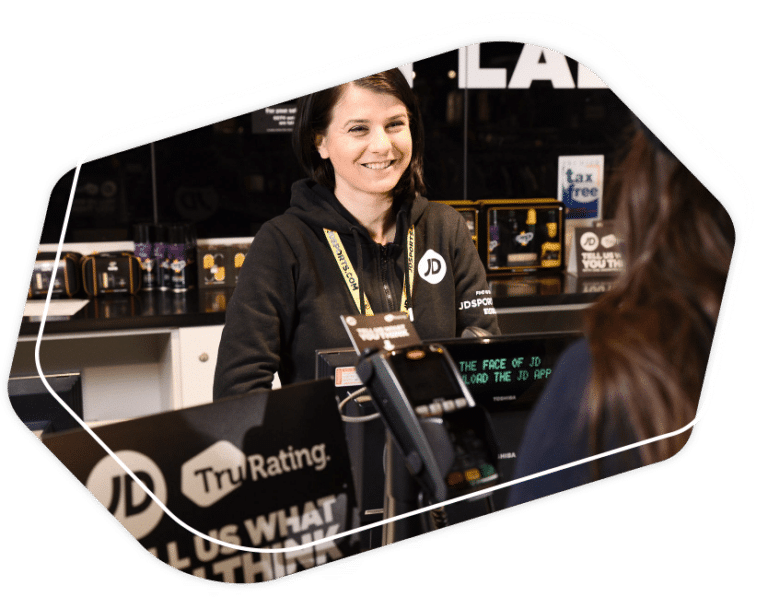
With TruRating, that dynamic changed. Instead of relying on generic satisfaction questions asked weeks later, Fortnum & Mason teams began asking focused, operational questions at the point of sale, tied directly to what they were trying to improve in the moment.
As Jon Moss, Customer Engagement Director at Fortnum & Mason, explained:
“The ability to start asking more meaningful questions, especially at point of sale in store, which has been traditionally quite difficult, has been really important for us.”
Those questions might focus on whether help was offered, whether customers felt welcomed, or whether the experience met expectations during that visit. Each response is linked to a transaction, store, and shift, giving leaders immediate clarity on where customer experience execution is strong and where it begins to drift.
Turning customer experience insight into coaching
One of the most significant shifts for Fortnum & Mason came from how customer experience insight was used on the ground. Feedback was no longer treated as a reporting metric, but as a practical coaching tool for managers and store teams.
Hourly heat-mapping allowed leaders to spot patterns during the trading day rather than after it had ended. That made it possible to identify specific moments where experience started to falter and address the root cause quickly. Sean Ghouse described how that plays out in practice:
“Where you can see the opportunities of an amber score at two o’clock in the afternoon, was that a poorly matched lunch break? Was there sickness? Was there something that happened in all the tills which slowed things down? We allow our teams to go away, find out what happened surgically, and fix it.”
Instead of guessing or applying blanket training, managers could see exactly when and where friction appeared and respond with targeted action. That approach also created a level of accountability and motivation across stores.
“There’s a bit of healthy competition as we like to publish the results. No one wants to be at the bottom of the league. But more than that, it’s a coaching tool.”
Customer experience that drives better execution
For Fortnum & Mason, customer experience is not about selling harder. It is about understanding customers better and making the visit feel worth their time.
“None of our customers need to be sold to. What we need to do is understand their lifestyle and make the experience worth the visit.”
That philosophy shows up in simple, human behaviours, like making people feel welcome, being present, and listening properly. TruRating makes those behaviours visible and measurable. Once behaviours can be measured, they can be coached, reinforced, and improved consistently across stores and shifts. The result is not just stronger customer experience scores, but more reliable execution leaders can trust.
Speed of improvement
One of the most meaningful outcomes Fortnum & Mason has seen is the speed at which teams can now improve in-store performance. Because insights are timely, targeted, and actionable, teams can set a benchmark, make a change, and see whether it worked without waiting for quarterly reports.
As Jon Moss explained:
“I think one of the biggest changes for us has been the speed at which we’ve been able to improve… We’ve seen consecutive months of improvement since we’ve been able to implement TruRating. And it is because we’ve been able to be more targeted with the questions and there is more engagement in how we use customer experience information.”
That speed creates sustained momentum rather than one-off fixes.
Why customer experience matters in every retail format
Sean Ghouse was clear that this way of thinking about customer experience applies far beyond premium retail. The principle is that if the experience isn’t delivered well in the moment, customers don’t return, regardless of price point or brand positioning.
“Customer experience is important in every single walk of life. Whether you go to a petrol station or a luxury store, if the experience isn’t good, people don’t come back.”
What differs by brand isn’t whether experience matters, but how deliberately it’s designed, delivered, and reinforced. At Fortnum & Mason, that belief shows up clearly in how guests are treated and how the physical environment supports the experience.
“I can’t stand snooty service. If you came to my house, I’d make you feel welcome. That’s exactly how our team greets every guest.”
“The Piccadilly building was built to have a residential feel. The red carpet slows the pace down and makes you feel at home.”
These details influence how customers behave, such as how long they stay, how comfortable they feel engaging with staff, and whether they choose to return. But understanding that impact doesn’t come from isolated anecdotes or end-of-journey surveys. It depends on hearing from a representative cross-section of customers, in the moment the experience is actually happening. Without that, insight is shaped by promoters and detractors, while the silent majority (the customers who quietly decide whether to come back) goes unheard. That’s where most retailers struggle. The intent is there, but the visibility isn’t.
Speakers
Sean Ghouse is the Director of UK Retail at Fortnum & Mason, with over 30 years’ experience in the luxury sector. He started as a part-time employee at Ciro Citterio on Regent Street while completing his degree in HR & Psychology. Since then he’s held senior roles at iconic brands like Harrods, Niketown, Matches Fashion.com, Watches of Switzerland, Dunhill and LVMH.
Jon Moss joined Fortnum & Mason in 2022 as Customer Engagement Director. Prior to joining the retailer he’s worked at brands like Sky and News UK, with experience in lifecycle management, segmentation and customer retention. At Fortnum & Mason he’s focusing on the use of data in delivering superior experiences across all channels.
The takeaway
Customer experience only becomes a growth lever when teams can act on it quickly, locally, and with confidence. A brand name alone doesn’t protect reputation. You need to ensure the experience you promised is the one actually being delivered in-store. That requires visibility into what’s happening on the floor, empowerment to respond, and the discipline to learn from outcomes. That’s how Fortnum & Mason turns customer experience into performance intelligence, every shift, every day.
If you’re ready to turn customer experience insight into action, find out more about TruRating’s customer feedback platform or book a demo today.
Useful resources
- Retail pricing optimization – strategies, models and examples
- Business intelligence in the retail industry – strategies and trends
- Retail metrics – 27 key metrics for your business
- The difference between multichannel and omnichannel retailing
- What is a good response rate for customer satisfaction surveys